
NCERT Solutions + Extra Questions | Study with Convex Classes Jaipur
Chapter Overview: Why Federalism Matters
Federalism is the backbone of India’s democratic structure. It ensures that power is shared between the Union and State governments, allowing diverse regions and cultures to thrive under one Constitution. This chapter explores:
- What is federalism?
- Types of federations
- India’s federal features
- Language policy and decentralization
- Comparison with Belgium and Sri Lanka
NCERT Solutions – Chapter 2: Federalism (Democratic Politics-II)
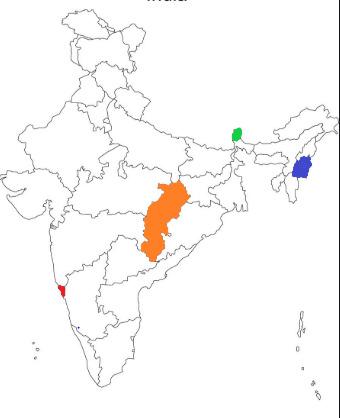
Q1. Locate the following States on a blank outline political map of India:
Manipur, Sikkim, Chhattisgarh, Goa Answer:
- Manipur – Northeast
- Sikkim – Between Nepal and Bhutan
- Chhattisgarh – Central India
- Goa – Western coast
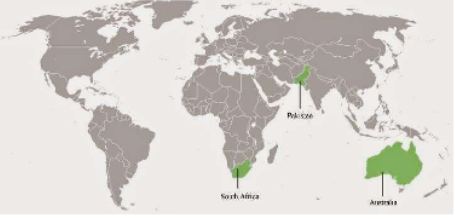
Q2. Identify and shade three federal countries (other than India) on a blank outline political map of the world.
Answer:
- South Africa
- Pakistan
- Australia
Q3. One similarity and one difference between Indian and Belgian federalism:
Answer:
- Similarity: Power-sharing between central and state governments
- Difference: Belgium has a community government; India does not
Q4. Difference between federal and unitary government:
| Federal Government | Unitary Government |
|---|---|
| Power is shared | Power is centralized |
| Example: India | Example: Sri Lanka |
Q5. Two differences in local government before and after 1992 amendment:
| Before 1992 | After 1992 |
|---|---|
| Irregular elections | Regular, mandatory elections |
| No independent powers | States must share powers and revenue |
Q6. Fill in the blanks:
Answer: Coming together, strong, holding together, central
Q7. Language policy reactions – Which one is correct?
Answer: Sangeeta’s view is correct. The policy of accommodation has strengthened national unity by respecting linguistic diversity.
Q8. Distinguishing feature of federal government:
Answer: ✅ Governmental power is divided between different levels of government
Q9. Group subjects under Union, State, and Concurrent Lists:
| Union List | State List | Concurrent List |
|---|---|---|
| Defence, Banking, Communications | Police, Agriculture, Trade | Education, Forests, Marriages |
Q10. Incorrect match:
Answer: ❌ Local governments – Residuary powers
Q11. Match List-I with List-II:
| List-I | List-II |
|---|---|
| Union of India | Prime Minister |
| State | Governor |
| Municipal Corporation | Mayor |
| Gram Panchayat | Sarpanch |
Q12. Correct statements:
Answer: ✅ A and B only
Extra Board-Focused Questions (With Answers)
Q1. What makes India a federal country?
Answer: India has a written Constitution, division of powers, independent judiciary, and levels of government (Union, State, Local).
Q2. What is decentralization?
Answer: It’s the process of transferring power to local governments like Panchayats and Municipalities.
Q3. Why was the 1992 amendment important?
Answer: It gave constitutional status to local bodies and mandated regular elections.
Q4. How does language policy support federalism?
Answer: It allows states to choose their official languages, promoting unity in diversity.
Study Smarter with Convex Classes Jaipur
Convex Classes Jaipur offers:
- Handwritten notes & mind maps for Class 8–12
- Concept-based coaching (online & offline)
- Free live tests & doubt sessions
- Digital store for notes & resources
- Expert guidance for CBSE, NEET, NDA, and Olympiads
Whether you’re preparing for board exams or competitive tests, Convex Classes Jaipur ensures clarity, confidence, and top results.
Civics Class 10 Chapter 1 Question Answer
History Class 10 Chapter 2 Question Answer
History Class 10 Chapter 1 Question Answe
Why Choose Convex Classes?
| Feature | Benefit |
|---|---|
| Student-centric content | Easy to understand, exam-focused |
| Online + Offline coaching | Flexible learning options |
| SEO-optimized resources | Rank higher in search, study smarter |
| Emotional & motivational support | Stay inspired and consistent |